
[en/nl]
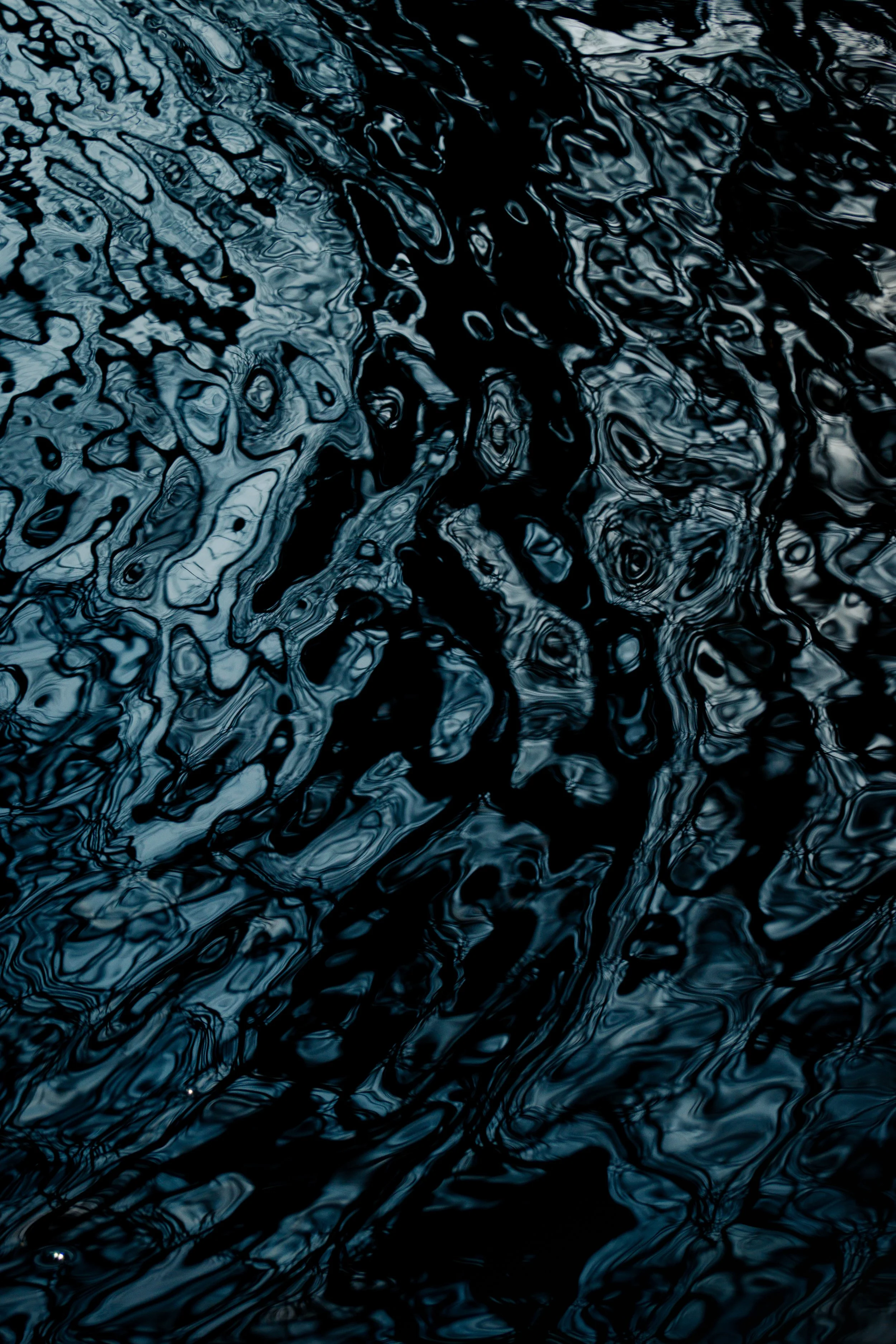


Hypnagogia is the term for the transitional phase between wakefulness and sleep. The word was introduced in 1848 by the French scientist Alfred Maury and is a combination of the Greek words Hypnos (sleep) and Agogos (to lead towards). It therefore literally means ‘the state that leads to sleep’.
This exhibition explores that fluid, intermediate state of consciousness. A transitional world in which apparent logic and reason, the familiar human perspective on everyday life, begin to fade. Where thoughts, images and sounds merge associatively and freely on the way to deep sleep.
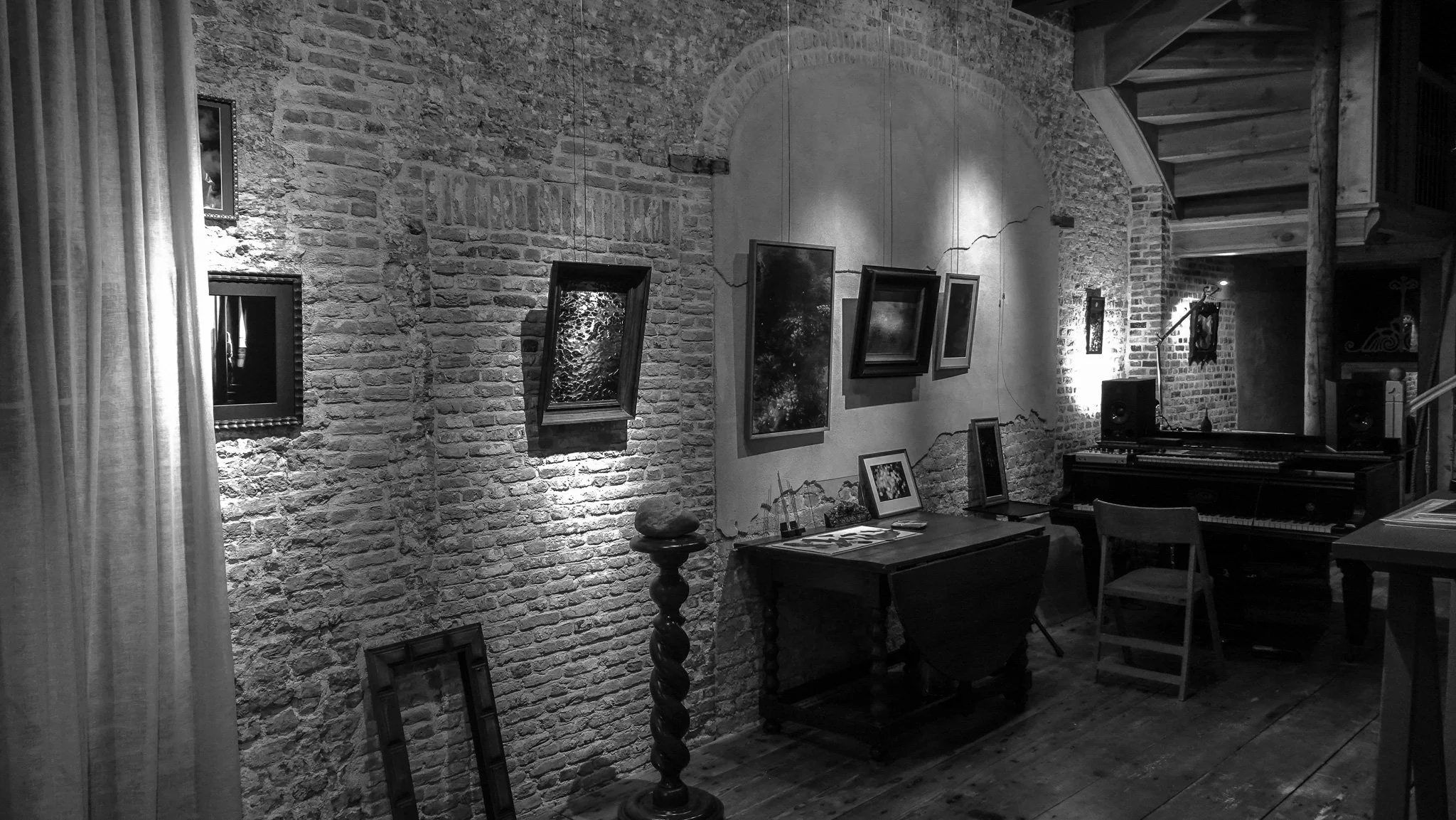
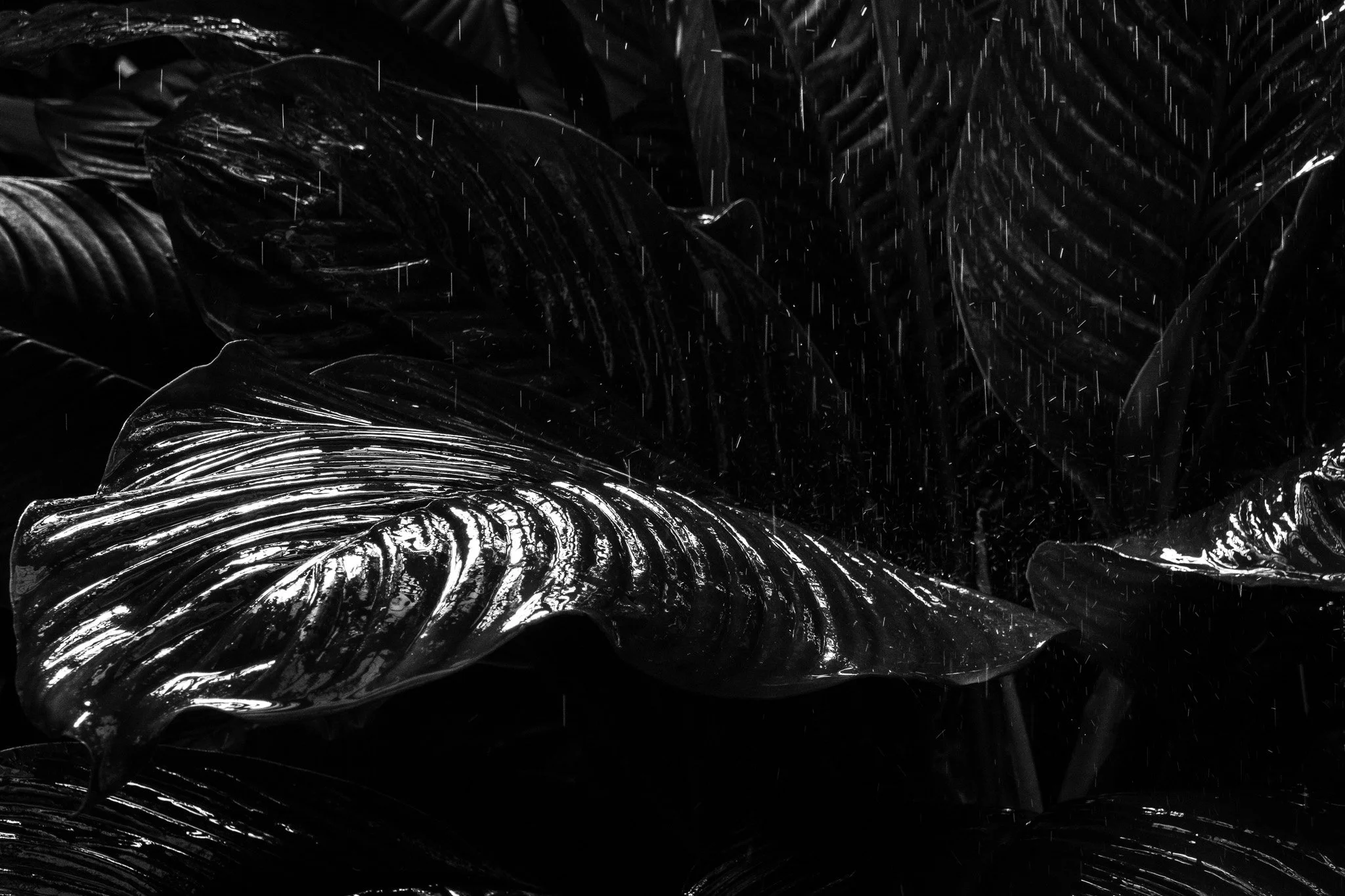
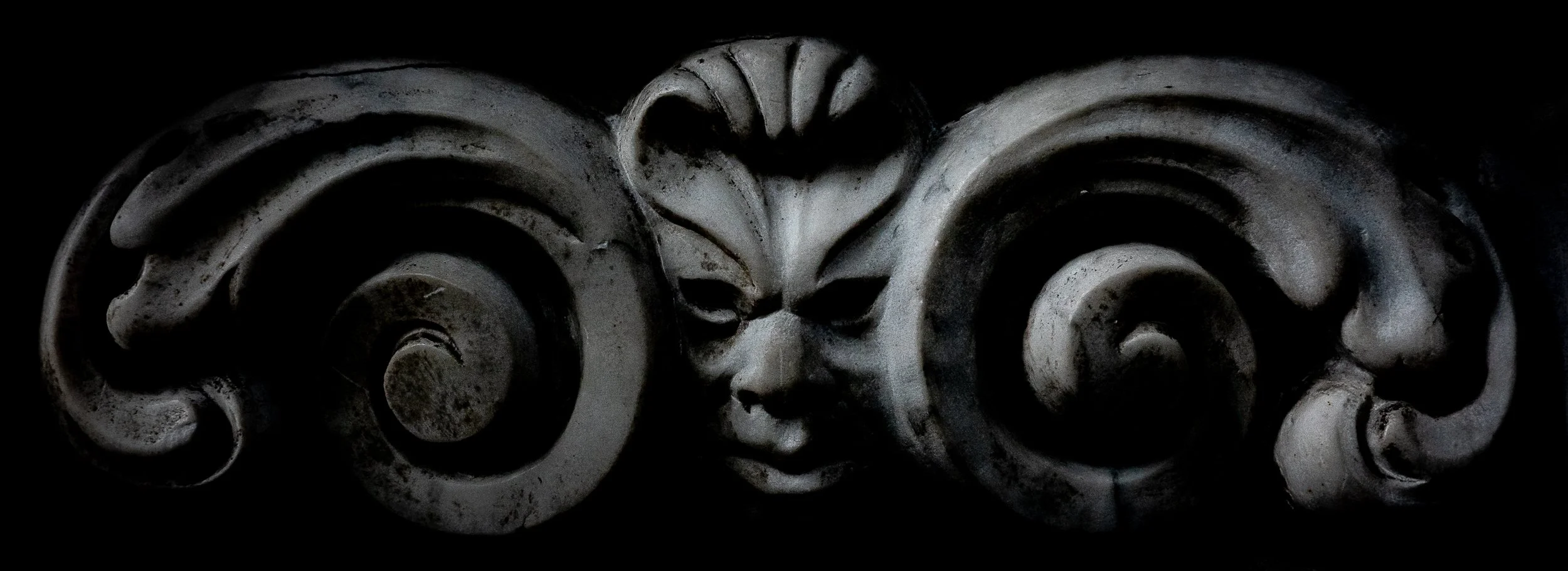
The photographs on display straddle the boundary between figurative and abstract, realistic and hallucinatory. Alongside earlier work, new images are on show in which Frans Blanker explores alternative uses of photography. The exhibition ‘Hypnagogia’ reflects this exploration and shares the dynamism of that quest. As well as photography, the exhibition is interwoven with video, sound and text.
Dream state without borders
I found the title ‘Hypnogogia’ to be a fitting theme for this exhibition. It is a biological transitional phase, a dream-like state, in which boundaries are stretched. The boundary between one image, sound or experience blends into the next, non-causally, without any clear meaning. That is, above all, what appeals to me in art: the way concepts and experiences are stretched. Dynamic boundaries are, both mentally and physically, an integral part of our being and our existence, and they define life. For instance, we can intellectually dissect a subject in our minds to such an extent that it becomes abstract, but our bodies, too, are constantly adapting and pushing their own boundaries. As well as our daily dose of hypnagogia, we are made up of tens of trillions of cells, whose cell membranes are among the most flexible structures in the human body. A cell lives precisely because its boundary – the cell membrane – is changeable. We experience this every day. Contrary to what current technological developments would have us believe – driven primarily by commercial interests – human beings cannot be reduced to a solvable scientific problem. A reassuring thought; that is also where our freedom lies.
The lucid dream state of Hypnagogia is also a world where rigid boundaries no longer exist. All our deterministic certainties dissolve during a transition in which two worlds (waking and sleeping) are united, merging into one another. In this process, the frontal cortex is gradually deactivated, in stages, whilst parts of the brain remain alert. This enables us to retain memories of this enigmatic, non-linear experience.
Countless artists find their creative spark in dreams or visions. Well-known examples of this can be found in the work of David Lynch (dream logic) or Yayoi Kusama (psychosomatic art). Perhaps less well-known internationally, but what I find to be a very fitting example of a transitional phase, is the poem ‘Stoel’ by Marije Langelaar (published in the collection ‘Vonkt’, 2017). Although I do not know whether this poem originated from, or is based on, a (lucid) dream, I was immediately drawn into the transformation described in it. The narrator (the first-person protagonist) undergoes a liminal (transitional) phase, in which she ultimately becomes nature itself through the wood of the chair and experiences and observes the world from that perspective. Experience it for yourself via the link below (available via the Poetry International Foundation, 2012).

Imponderables as Medicine
In an era in which everything seems to be captured, recorded, and reduced to algorithms, Big Data and measurable outcomes, “imponderabilia” serves as a form of protection or even resistance against this trend. It reminds us that human beings are not merely biological machines, but that they feel, dream, and experience. The term “imponderabilia” (Latin for “unweighable things”) can be used as a collective term for aspects of human existence that are difficult to measure, subjective, yet essential, such as intuition or love. Everyone experiences emotion, atmosphere or time. Hypnagogic hallucinations, too, are intangible phenomena that are essential to the proper balance and functioning of the human psyche.
Thus, imponderabilia (things that are more difficult to measure) are not side effects, but are part of reality and form part of a state of consciousness present in everyone. Art, too, is a way to break through our ingrained habits and reconnect with an experience that lies deeper beneath the surface. There is now a broad scientific consensus that art, in addition to offering comfort, can have a healing effect (see also my essay “Nepenthe”). Professor of psychobiology Daisy Vancourt says the following in an interview with art editor Anna van Leeuwen: ““I am particularly enthusiastic about the biological effects of art (…), as we can now demonstrate that art influences stress hormones, inflammatory proteins in the immune system and even – there are now indications of this – the way in which our genes are expressed.” (de Volkskrant, 3 September 2026. Translated from Dutch).
Another perspective I would like to put forward here is that of the philosopher Henri Bergson (1859-1941): he argues that the intellect makes us lazy. The intellect divides the world into convenient, simple categories and patterns. This is geared towards practical survival but also involves a routine simplification of it, causing the nuance and complexity of life to be lost. Artists break open these frameworks and also draw on intuition and imagination to experience the world more intensely, to create something new from that state and to share the result. You could argue that hypnagogia essentially does the same thing: as you drift off to sleep, your rational mind loses control. This clears the way for creativity and associative thinking, allowing unconventional, less obvious solutions or applications to emerge.
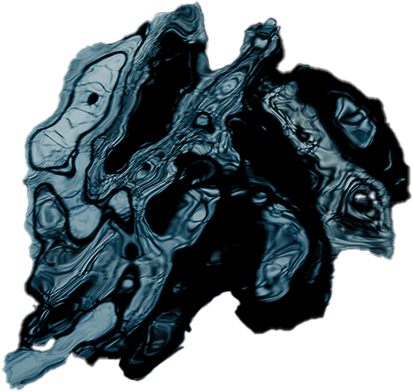
Henri Bergson
The Bergsonian idea or proposition – that reality is changeable and cannot be defined unambiguously – provides inspiration and ties in well with the exhibition Hypnagogia. Henri Bergson (1859-1941) was one of the most influential French philosophers of the 20th century. Like Alfred Maury (who, as well as coining the term ‘Hypnagogia’, was also his contemporary), Bergson was deeply engaged with human consciousness, dreams and the workings of the psyche. His influence in the early 20th century was immense, and he was regarded as a celebrity in his own time. Even whilst he was still alive, this popularity grew into a veritable ‘Bergsonmania’, which was unusual for a philosopher even by the standards of the time. For example, there were queues lasting hours for his lectures in Paris, causing traffic jams, and in 1927 he was awarded the Nobel Prize in Literature.
Thanks to Bergson’s popularity, his ideas on time (la durée, his core concept), the life force (élan vital) and creativity reached a wider audience than just academic scholars. In the early 20th century, they also served as a source of inspiration for the arts. Writers such as Virginia Woolf (stream of consciousness technique) and Marcel Proust (on the psychology of time and memory) can be linked to Bergson’s ideas. Parallels can also be drawn with Cubism and Marcel Duchamp.
Bergson opposed dogmatic and totalitarian systems and advocated an open moral code in society: a contextual ethics that takes into account the unique circumstances of each situation and can adapt flexibly to them. For Bergson, perception is not a passive and rigid recording, but an active process of inquiry, in which factors such as memory and expectations (or, as I would say, imponderables) can play a role. A century later, this fits into the current social debate on pluralism, social justice and how to deal with emerging technologies such as AI.
Listen to a podcast about Bergson via the link below, featuring Hein van Dongen as a guest speaker. In Dutch only
[©Filosofie Podcast, 7 May 2026]
“Welcome to Atelier 21, where nothing is permanent and everything is in a state of flux.
Where broader meanings emerge in the transitions.”
Frans Blanker, september 2026

text, images, video and sound ©frans.blanker